


Comprehensive Oncology Research Environment
Data Hub for All Aspects of Laboratory, Translational, Clinical, and Population Research
 CODE • Comprehensive Oncology Data & Engineering • Cancer Center Shared Resource
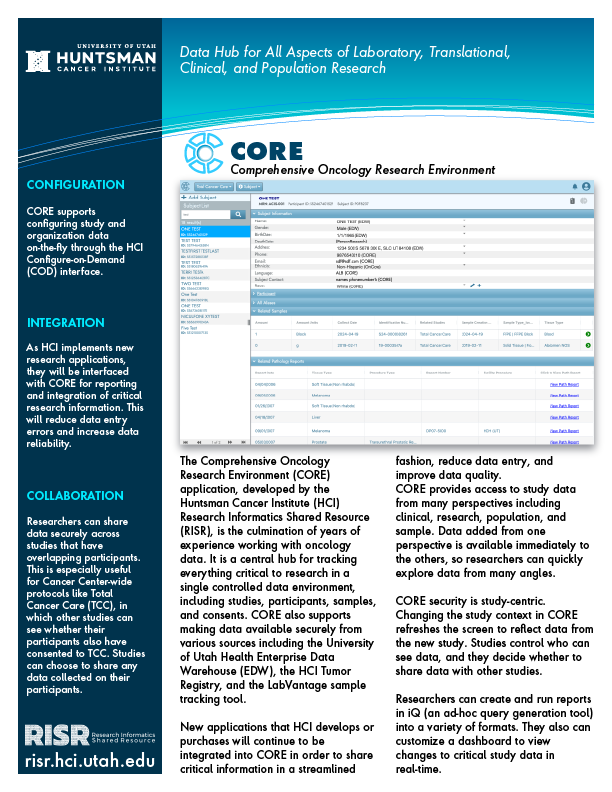
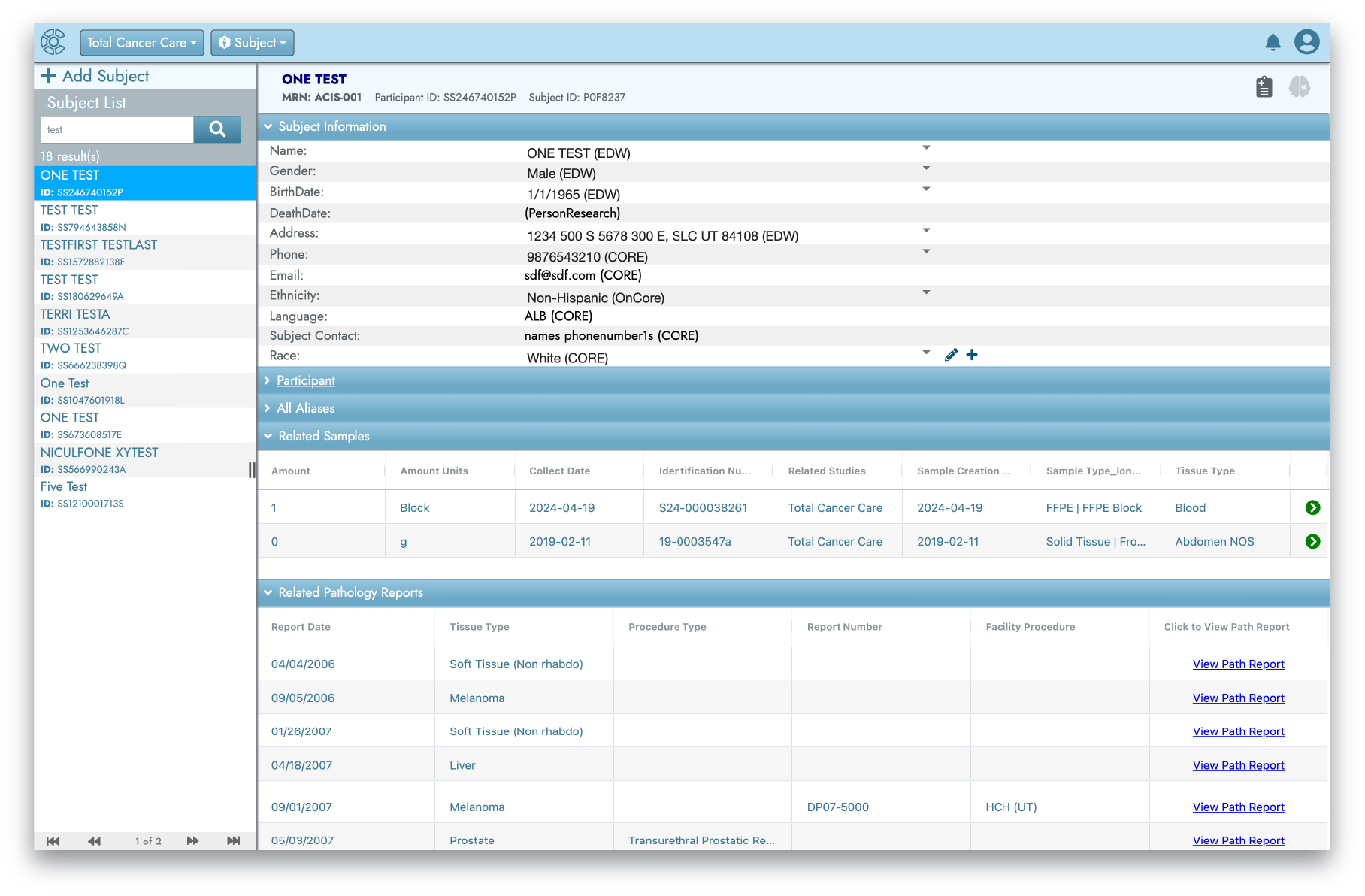
The Comprehensive Oncology Research Environment (CORE) application, developed by the Huntsman Cancer Institute (HCI) Comprehensive Oncology Data & Engineering (CODE) Shared Resource, is the culmination of years of experience working with oncology data. It is a central hub for tracking everything critical to research in a single controlled data environment, including studies, participants, samples, and consents. CORE also supports making data available securely from various sources including the University of Utah Health Enterprise Data Warehouse (EDW), the HCI Tumor Registry, and the LabVantage sample tracking tool.
New applications that HCI develops or purchases will continue to be integrated into CORE in order to share critical information in a streamlined fashion, reduce data entry, and improve data quality.
CORE provides access to study data from many perspectives including clinical, research, population, and sample. Data added from one perspective is available to the others, so researchers can quickly explore data from many angles.
CORE security is study-centric. Changing the study context in CORE refreshes the screen to reflect data from the new study. Studies control who can see data, and they decide whether to share data with other studies.
Researchers can create and run reports in iQ (an ad-hoc query generation tool) into a variety of formats.
Key Capabilities
CONFIGURATION CORE supports configuring study and organization data on-the-fly through the HCI Configure-on-Demand (COD) interface.
INTEGRATION As HCI implements new research applications, they will be interfaced with CORE for reporting and integration of critical research information. This will reduce data entry errors and increase data reliability.
COLLABORATION Researchers can share data securely across studies that have overlapping participants. This is especially useful for Cancer Center-wide protocols like Total Cancer Care (TCC), in which other studies can see whether their participants also have consented to TCC. Studies can choose to share any data collected on their participants.
REPORTING Report on any collected data through iQ. CORE organizes research data into a reportable structure, based on approved models and expertise.
SECURITY Keep research data secure and HIPAA compliant. As a study-centric application, CORE gives studies full control over the data they collect.
CORE Features
STUDY — Manages critical data on studies, as well as each study's collaboration, security, access to data sources, and access to other perspectives and modules.
SUBJECT — Manages participant records. Participants are entered into CORE once. Each participant may have multiple demographics obtained from different data sources, and studies can designate a primary demographic for their participants. Participant records also include enrollment, withdrawal, status, and other general relationships to studies.
CONSENT — Supports uploading consents directly into CORE or importing them from various data sources. CORE groups consents by participant. Researchers can track multiple consent versions and types.
Interfaces
CODE has interfaced CORE with the following applications and databases: CCR, LabVantage, OnCore, RSR, the HCI Tumor Registry, and the EDW. In the future, these interfaces will be expanded to include additional data elements.
Requirements
- Google Chrome (latest)
- Microsoft Edge (latest)
- Safari (latest)
Services Available
- Training
- Technical Support
- Application Configuration
- Application Development
- Query and Report Generation
- Natural Language Processing
CODE • Comprehensive Oncology Data & EngineeringCancer Center Shared Resource


